Quick answer
Probate in New York costs more than most families expect. Court filing fees run from $45 to $1,250 based on estate value. Executor commissions are set by statute, and attorney fees are whatever the court finds reasonable. The biggest hidden cost is carrying an empty house for a year while the estate stays open.
Summary
- Probate has four costs: filing fee, attorney fee, executor commission, and the carrying cost of the house.
- Filing fees run from $45 to $1,250 by estate value (SCPA 2402).
- Executor commissions follow a statutory schedule (SCPA 2307) but are often waived by a family member.
- Attorney fees have no fixed percentage; the court reviews them for reasonableness (SCPA 2110).
- Carrying an empty house, often $14,400 to $24,000 over a year, is usually the biggest cost, and the one you can control.
Everyone asks what probate costs, and the honest answer has four parts, not one. Three of them are predictable. The fourth, the cost of holding an empty house for months, is the one that quietly dwarfs the rest. Here is the full picture, with the real New York numbers.
On this page 13 sections
The Four Costs of New York Probate
Probate cost is not a single bill. It is four separate things that add up, and they land at different times.
- The court filing fee, paid when you file, set by statute.
- The attorney fee, which the court reviews for reasonableness.
- The executor commission, set by a statutory schedule, often waived by a family member.
- The carrying cost of the house, which runs every month the estate stays open.
Court Filing Fees
The Surrogate’s Court filing fee is fixed by law and scales with the value of the estate (SCPA 2402). It is the smallest of the four costs, and it is the same whether you are filing for probate or administration.
| Estate value | Filing fee |
|---|---|
| Less than $10,000 | $45 |
| $10,000 to less than $20,000 | $75 |
| $20,000 to less than $50,000 | $215 |
| $50,000 to less than $100,000 | $280 |
| $100,000 to less than $250,000 | $420 |
| $250,000 to less than $500,000 | $625 |
| $500,000 and over | $1,250 |
On top of the base fee, you pay a small charge for each certified copy of the Letters, which you will need several of, because banks and title companies each keep one.
The fee is based on the value stated in the petition. If the estate turns out to be worth more than first reported, the court can require an additional fee to match the higher bracket, so the value has to be stated honestly from the start.
Attorney Fees
New York does not set a fixed percentage for probate attorney fees. The Surrogate’s Court reviews the fee for reasonableness (SCPA 2110). In practice, attorneys charge an hourly rate, a flat fee, or a reasonable amount tied to the size and complexity of the estate.
A simple, uncontested estate often runs a few thousand dollars in legal fees. A contested will, a missing heir, or litigation can multiply that quickly. Because the fee is negotiable and court-reviewed, it is worth discussing the fee and the timing before you hire anyone, especially when the estate is cash-poor.
Executor Commissions
Unlike the attorney fee, the executor’s commission is set by statute on a sliding scale (SCPA 2307). It is based on the value of the assets the executor receives and pays out.
| Portion of the estate | Commission rate |
|---|---|
| First $100,000 | 5% |
| Next $200,000 | 4% |
| Next $700,000 | 3% |
| Next $4,000,000 | 2.5% |
| Above $5,000,000 | 2% |
Here is the part families miss: a relative serving as executor can waive the commission, and many do, because taking it means paying income tax on it and taking money that would otherwise go to the heirs. When a family member serves and waives, this cost disappears.
The Cost Nobody Budgets For: Carrying an Empty House
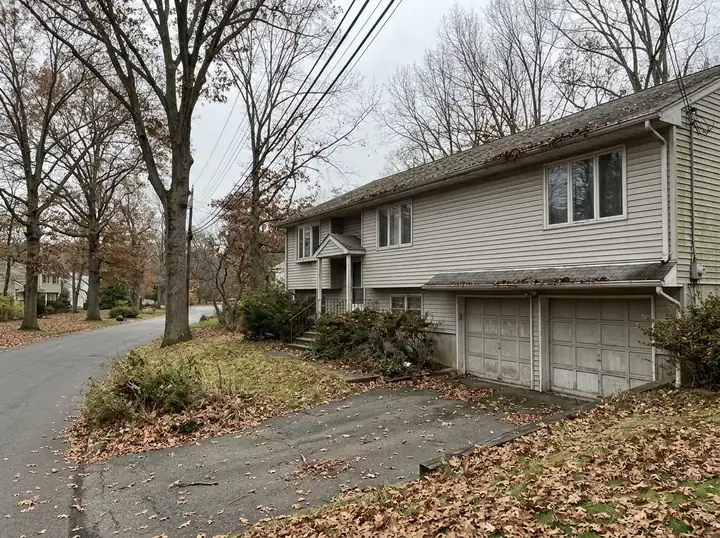
This is the one that hurts. While the estate is open, usually many months, the house keeps costing money every single month, whether anyone lives in it or not.
- Property taxes, which do not pause for probate.
- Homeowners insurance, and a vacant house often costs more to insure, not less.
- Utilities kept on to prevent frozen pipes and mold.
- Basic maintenance, lawn, snow, small repairs, to keep it from deteriorating.
- The mortgage and interest, if there is still a loan.
- Security, because an empty house is a target.
Add it up and an empty house can easily cost $1,200 to $2,000 a month in the New York counties we serve. Over a year-long probate, that is $14,400 to $24,000, far more than the filing fee and often more than the attorney. It is also the one cost you can control, by selling the house sooner.
A Sample Estate
Put it together on a $400,000 estate whose main asset is the house, with a willing family executor who waives the commission.
| Cost | Rough figure |
|---|---|
| Court filing fee | $625 |
| Attorney fee (simple estate) | A few thousand dollars |
| Executor commission | $0, waived by the family executor |
| Carrying the house for a year | $14,400 to $24,000 if left empty |
The lesson is clear. The paperwork costs are modest and mostly fixed. The expensive part is time, and time is the part you can shorten by turning the house into cash.
Does the Estate or the Heirs Pay?
A common worry is that the heirs will be billed personally. They will not. Every one of these costs is an expense of the estate, paid from estate assets before anyone inherits. The filing fee, the attorney, the commission, and the carrying costs all come off the top, and what is left is divided among the heirs.
That is exactly why the carrying cost matters so much. Every month the house sits empty, the estate shrinks, and the heirs inherit less. It is not an abstract court cost. It is money leaving the family’s pocket, one tax bill and one insurance premium at a time.
How to Keep Probate Costs Down
- Have a family member serve as executor and waive the commission.
- Agree on the attorney fee and the payment timing up front.
- File a clean, correct petition the first time, so it is not rejected.
- Sell the house sooner rather than later, to stop the carrying costs.
On that last point, a fast cash sale is the single biggest lever. We buy inherited New York houses as-is and close in about 21 days on average, which stops the monthly bleed while the court finishes. If a listing would net the estate more, we can show you that number too.
Conclusion
Probate in New York is not expensive because of the court. It is expensive because of time. The filing fee is small, the commission is often waived, and the attorney fee is negotiable, but every month the house sits empty costs real money that comes out of the heirs’ pockets. Settle the paperwork efficiently and move the house, and you keep most of the estate where it belongs. When you are ready, we will show you a cash number and a listing number on the same house.
Thinking about selling an inherited New York house?
The fastest way to cut probate costs is to stop carrying an empty house. We can show you a written cash offer and a listing estimate on the same property, with a close in about 21 days once Letters are in hand.
Not legal advice. CrossWest Home Buyers buys houses; we’re not attorneys, and nothing here is legal advice. Probate, title and inheritance questions turn on the facts of your own estate, so talk to your attorney before you decide. For official New York guidance, start with the New York State Unified Court System.